
Mata no Riyal: When Traditional Canoes Meet Modern Sailing Knowledge
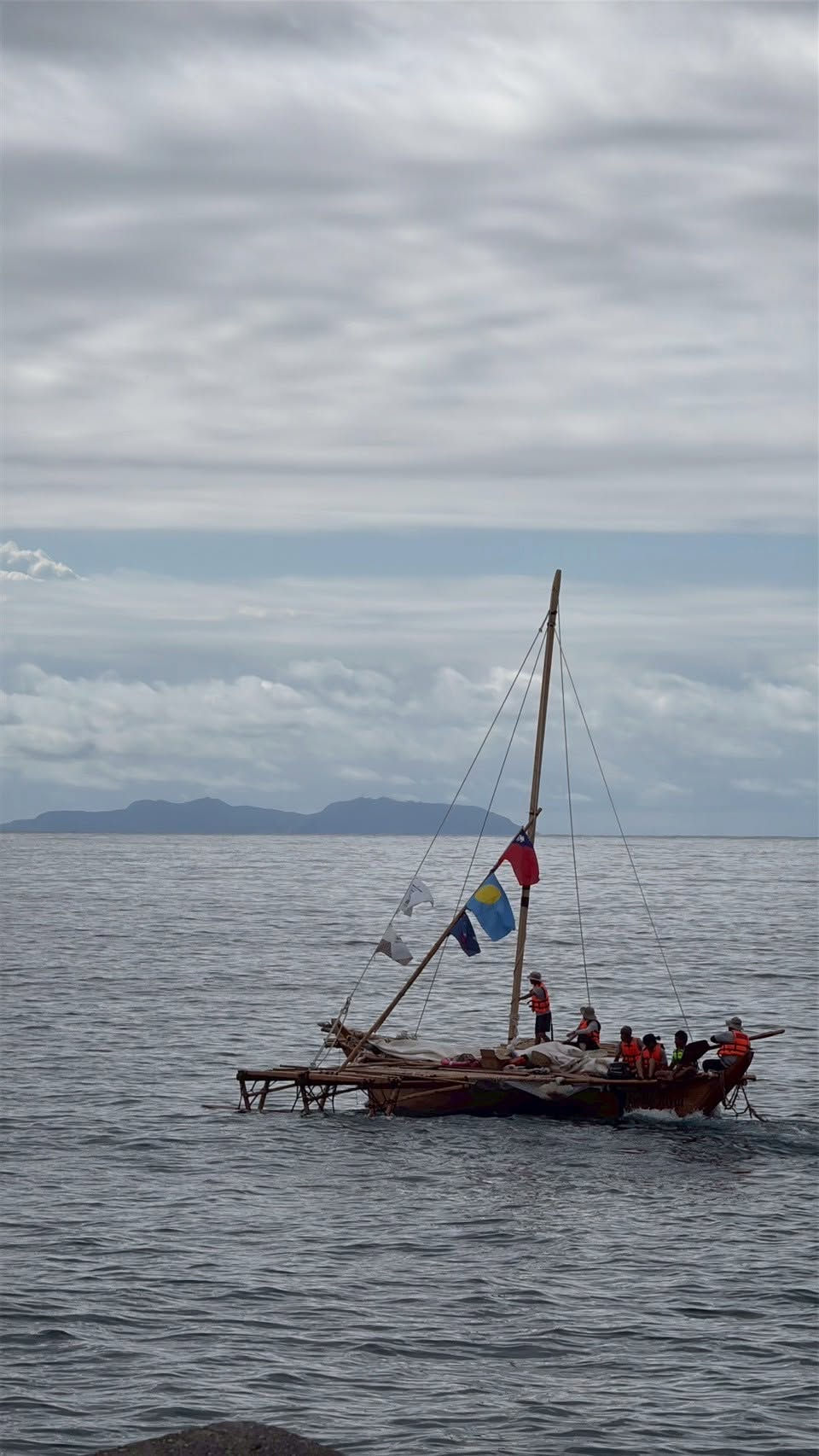
Over the past year, a remarkable project has been taking shape on Taiwan's east coast. A group of Indigenous builders, sailors, and cultural practitioners came together with an ambitious goal: to build a large ocean-going sailing canoe inspired by traditional Pacific voyaging vessels.
Drawing inspiration from designs shared by Guam-based sailor Ronald McFall, while incorporating knowledge from Tao (Yami) and Amis maritime traditions, the team set out to create something both ancient and new. The vessel is named Mata no Riyal, meaning "Eye of the Ocean" in Amis.

Rebuilding a Maritime Tradition
For many Indigenous peoples across the Pacific, the ocean was never a barrier: it was a highway. Long before modern navigation systems existed, Austronesian peoples sailed across vast distances using their understanding of wind, currents, stars, waves, and weather. These maritime traditions connected communities across thousands of kilometers of ocean.
Today, many groups throughout the Pacific are working to revive these skills, rebuild traditional vessels, and reconnect with maritime knowledge that was once central to daily life. Mata no Riyal is part of this larger movement.

Learning to Work With the Wind
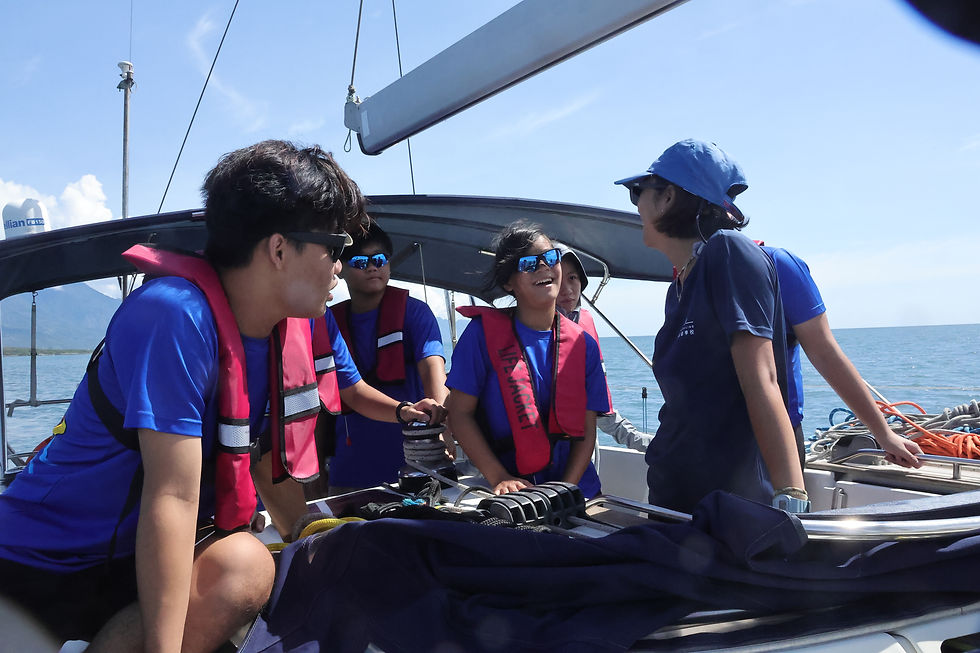
Building a boat is one challenge, but learning how to sail it is another. As the project progressed, the team realized they would benefit from some practical sailing training before launching their canoe into open water. Through the support of local organizations, a two-day sailing course was organized to introduce the crew to fundamental sailing concepts.

Of course, nobody becomes an expert sailor in two days, but that was never the goal. The purpose was to provide a foundation: understanding how sails generate power, how boats move through the wind, how crews coordinate maneuvers, and how sailors make decisions based on constantly changing conditions.
While modern sailboats differ greatly from traditional Pacific canoes, the principles remain surprisingly similar. Yes, the technology changes, but the beautiful thing is that the wind does not. The same forces that pushed Austronesian voyagers across the Pacific thousands of years ago continue to move boats today.

Modern Sailing as a Tool
Throughout the training, participants explored concepts such as sail trim, points of sail, steering techniques, and crew communication. Rather than replacing traditional knowledge, modern sailing instruction served as a tool to better understand the relationship between wind and boat movement. In many ways, the course became a conversation between different traditions of maritime knowledge.
Modern sailing offers scientific explanations for phenomena that traditional sailors understood through generations of observation and experience. Both approaches ultimately seek to answer the same question: How do we work with the wind rather than against it?

A Journey Around Taiwan
Following the completion of the vessel, Mata no Riyal embarked on an ambitious voyage around Taiwan. The journey has already covered a significant portion of the island's coastline, demonstrating both the capability of the vessel and the determination of the crew. Like many pioneering projects, the voyage has also brought challenges and lessons. The canoe is currently undergoing repairs and adjustments in Taipei before continuing future adventures.

For a first-generation project of this scale, those refinements are a natural part of the learning process. Every voyage reveals new opportunities to improve design, construction techniques, and sailing systems. That is how maritime traditions have always evolved and, at a time when many communities are working to reconnect with maritime culture, projects like this remind us that traditional knowledge is not something frozen in history. Instead, it is living knowledge, and a knowledge that can still be practiced, adapted, and passed on to future generations.
Sailing Forward
At our sailing school, we often teach students how to rig a boat, trim a sail, or steer a course. Projects like Mata no Riyal remind us that sailing can also be something much larger: a way to understand history, a way to connect with culture, and a way to rediscover humanity's long relationship with the ocean.
As Mata no Riyal continues its journey, we look forward to seeing where the next chapter leads—and to following the growing movement to revive traditional sailing and maritime culture throughout Taiwan and the Pacific.



Comments