
Sailing: An activity children can learn for a lifetime
For many people, sailing feels like an unreachable sport. Unlike badminton, where you just need to buy a racket and find an open space to start, or running, where you put on shoes and head out the door, sailing requires a boat, an instructor, and a suitable body of water.
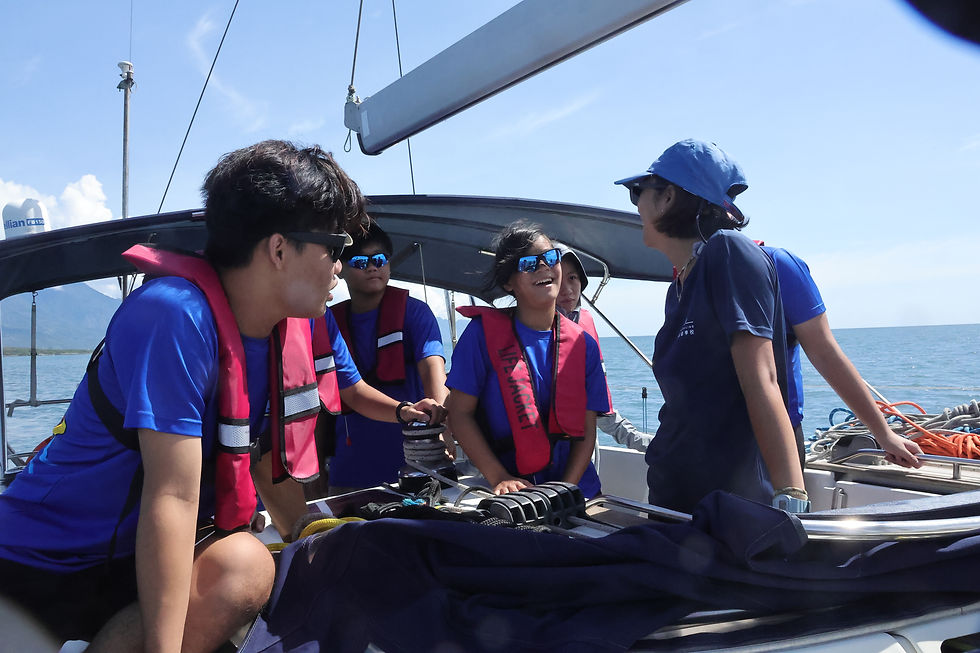
It is no wonder that the barrier to entry seems high. But after so many years of teaching children at the Taitung Sailing School, we've come to feel that the truly precious part of our work isn't simply helping our students learn a new sport, but knowing that they are learning skills to carry with them for a lifetime.

Learning more than just how to move the boat forward
Once a child sits in a sailboat, they quickly discover that nature doesn't follow the answers in a textbook. The wind can suddenly pick up or just as suddenly die down; waves, currents, and weather all affect the original course. Students need to learn to observe wind direction, control the sail, steer, and then decide their next move. The first time in class, they might still need the instructor to tell them, "Turn this way now," but gradually they start to judge for themselves and think "The wind is coming from here now, I should go the other direction." Moving from following instructions to trusting their own judgment is a crucial part of sailing education. Even better, our students learn not only sailing techniques but also how to think and make decisions when facing change.
A world beyond the lake
We usually start our courses by having our students learn to sail on Taitung's Flowing Lake, first getting to know the boat, wind direction, steering, and sail trim, before gradually moving to larger bodies of water. Eventually, our students can graduate from sailing on the lake to sailing on the ocean, and even get the chance to take part in voyages to outlying islands like Green Island or Orchid Island. In doing so, an island that was once just a spot on a map becomes a stretch of ocean they've actually traveled themselves. Sailing also naturally sparks children's curiosity about all kinds of things: Why is the wind here different from somewhere else? Which way do ocean currents flow? How did sailors find their way before GPS existed? These questions naturally extend into geography, meteorology, physics, history, and culture. To us, this is also what makes sailing so interesting: a boat can become a classroom without walls.

A sport that can grow alongside a child
Sailing has another special quality: there's no age at which it's "supposed to end." A child can start with a small dinghy, and as they grow older move into racing, larger boats, and long-distance voyages—or they can simply choose to keep sailing as a pure leisure activity. One day, the child who once sat in a small sailboat learning to steer might even become an instructor who takes the next generation out to sea. You don't have to become a professional sailor, and you don't have to race. Sailing can accompany a person from childhood into adulthood, and even become a lifelong joy.
So, what about that barrier to entry?
This is indeed a question we are often asked. Unlike badminton, you can't just pick up a racket and start sailing any time. Sailing requires equipment, a safe teaching environment, and professional instructors. But we believe this is exactly where sailing education truly needs to be built up: not by requiring every family to own a boat first, but by having someone willing to open that door, so children get the chance to sit in a boat for the first time. This is what Taitung Sailing School has been working on for close to a decade now. Through school courses, sailing camps, and educational partnerships, we hope more children can start from their first time at the helm, and gradually come to know the wind, the ocean—and themselves.
What we hope our young students ultimately remember isn't just how to sail a boat to its destination, but that the next time they face an unfamiliar environment, they'll know they can observe first, then judge, and then move forward with courage. Perhaps where sailing truly takes children isn't just the next harbor, but the bigger world beyond.



Comments